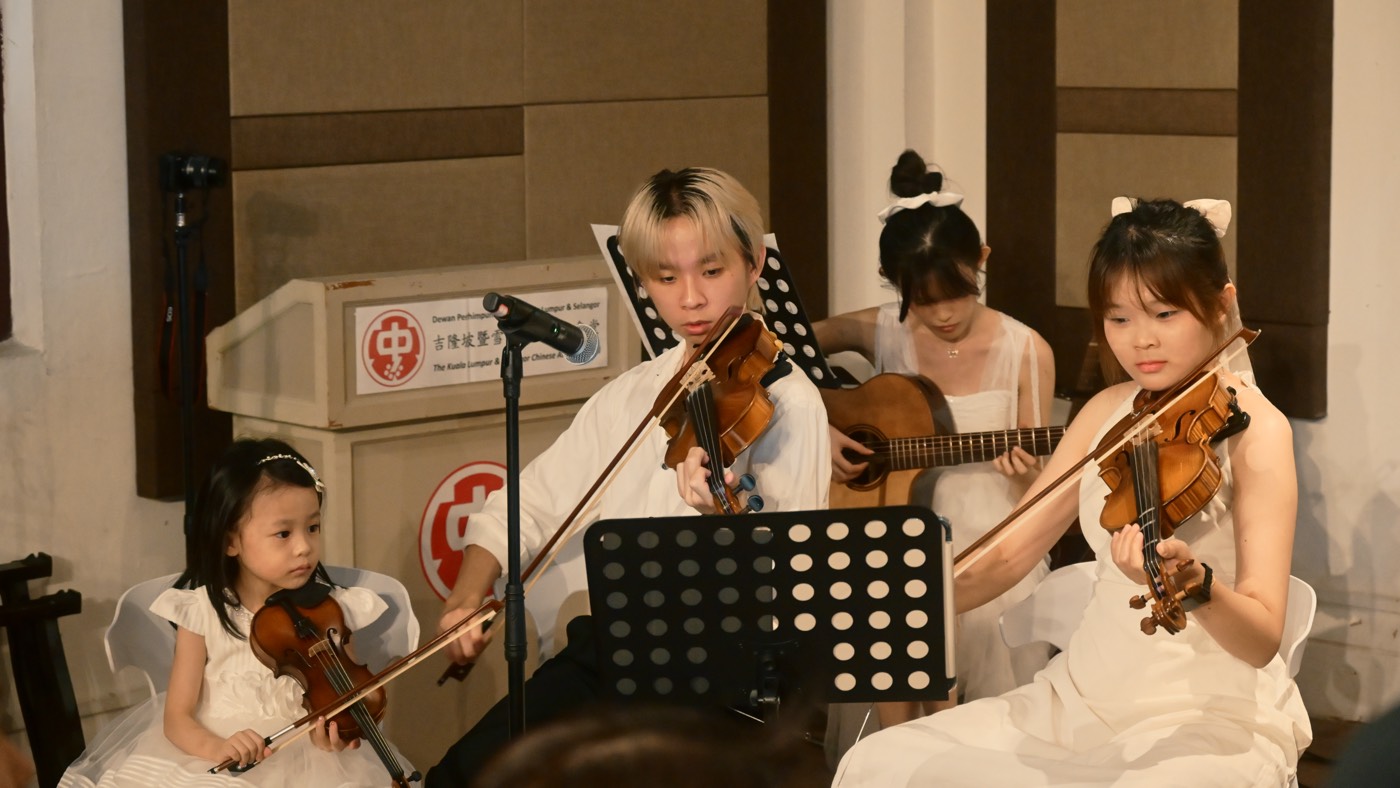
Parents of new violinists tend to arrive at month two quietly worried. The piano students in the family are playing tunes. The violinist is producing a sound somewhere between a door hinge and a seagull, and appears to be working twice as hard for it.
This is the normal shape of the instrument, not a warning sign. Here is what the first six months actually contains, so you know what you are looking at.
- Two hard problems arrive at once — finding the pitch, and making the sound.
- Tone before tunes. The first weeks buy something that pays off for years.
- Scratchiness resolves somewhere around months two to four.
- By month six most students are playing recognisable pieces with a clean, steady sound.
Why the violin starts slowly
On the piano, the note is decided for you: press the key and a tuned string sounds. On the violin, nothing is decided. The left hand has to place a finger on an unmarked fingerboard within about a millimetre of correct, while the right arm draws a bow at the right speed, at the right distance from the bridge, with the right weight. Either failure produces something unpleasant, and beginners get both wrong simultaneously.
This is why the early weeks look unproductive and are not. What is being built is a physical relationship with the instrument — and it is the reason violinists who are taught properly at the start sound so different from those who were rushed.
Month by month, roughly
| Period | What is being built | What it sounds like |
|---|---|---|
| Weeks 1–3 | How to hold the instrument and the bow. Posture, bow hold, open strings. | Long, plain notes. Some scratch. No tunes yet. |
| Weeks 4–8 | Straight bowing at a steady speed. First fingers on the fingerboard. | Cleaner long notes; simple three- and four-note patterns. |
| Months 3–4 | Left-hand shape, basic finger patterns, first real pieces. Reading begins in earnest. | Recognisable short tunes. Tone noticeably steadier. |
| Months 5–6 | String crossings, longer pieces, beginnings of dynamics and phrasing. | Music. Imperfect, but unmistakably music. |
Every student moves through this at their own pace, and a child who takes eight months rather than six has lost nothing. The order rarely changes, though — tone comes before repertoire, on purpose.
The first weeks are not slow progress towards music. They are the thing that makes the music possible.
What good practice looks like early on
Violin practice in the first months is unusually short and unusually specific, and that is correct. Ten to fifteen minutes on most days will do more than an hour at the weekend, because what is being trained is a physical habit rather than a piece of knowledge.
- Check the setup: instrument up, shoulder relaxed, bow hold rebuilt from scratch each time.
- Long bows on open strings — the single most valuable thing a beginner can do.
- The finger pattern or short passage set this week, slowly.
- One piece played through for enjoyment at the end.
Tuning is a parent job at first. A violin drifts, and a child practising on an out-of-tune instrument is training their ear towards the wrong target — which is worse than missing the session.
A thirty-minute trial with a violin teacher tells you more than any amount of reading. At Pandan Indah or Damai Perdana. Trial lesson fees apply.
Book a Trial LessonThe things that genuinely go wrong
Three problems account for most early difficulty, and all three are fixable if they are caught.
The first is an instrument that is the wrong size — too large, and the left arm cannot reach without collapsing the wrist. The second is a bow that has not been rehaired or rosined properly, which produces a thin sound no technique can rescue. The third, and most common, is practising without checking the setup: a bow hold that has quietly degraded over three weeks undoes a great deal of teaching.
None of these are the child. All are worth raising with the teacher the week you notice them.
Renting before buying
Children outgrow violins. A student who starts at six on a small fractional size will move up more than once before they reach full size, which makes renting the sensible route for the first years — and most rental arrangements let you trade up as the child grows rather than buying the same instrument three times.
When you do buy, spend the money in an order that surprises most parents: a decent bow and a proper setup do more for the sound than a more expensive violin does. A well-set-up modest instrument with a good bow will out-play a costlier one that has never been adjusted. Ask the teacher to try a candidate before money changes hands.
What parents can usefully do
You do not need to play the violin to help, and trying to correct notes from across the room is rarely useful. Three things are.
- Tune the instrument, or check it is tuned, before every practice in the first months.
- Protect the slot rather than the length — ten minutes at the same time each day.
- Ask them to play you the hardest bar, not the whole piece. It quietly redirects the session towards practice.
And resist comparing progress with the pianist next door. The two instruments are not on the same curve at the start, and the violin catches up.
What month six looks like
By the six-month mark a student who has practised most days is generally playing short pieces with a clean, steady tone, reading simple notation, crossing strings without incident, and starting to shape a phrase rather than merely surviving it.
It is also, for many, the point at which the instrument stops feeling like a struggle and starts feeling like theirs. Our calendar is built around the recital — every three months, students at every level perform — and a first violin recital usually lands somewhere in this window. It is the moment the lessons turn into music.
Frequently asked questions
Expect a recognisably clean tone somewhere between two and four months of regular practice. The scratch is not a sign of failure — it is the sound of a bow that has not yet learned to travel straight at a consistent speed and weight, and it resolves with mileage.
Because the violinist has to produce the note as well as choose it. A piano key gives a correct pitch immediately; on the violin the left hand must find the pitch with no frets to guide it while the right arm simultaneously makes the sound. Two hard problems arrive at once.
Violins come in fractional sizes from very small upwards, matched to arm length rather than age. Sizing is checked by having the child extend their arm along the instrument, and children move up sizes as they grow. Your teacher will size it before you rent or buy.
No, but the bow and the setup matter more than parents expect. A modest violin that has been properly set up, with a functioning bow and decent strings, will out-play a more expensive instrument that has not been looked at. Ask the teacher before buying.