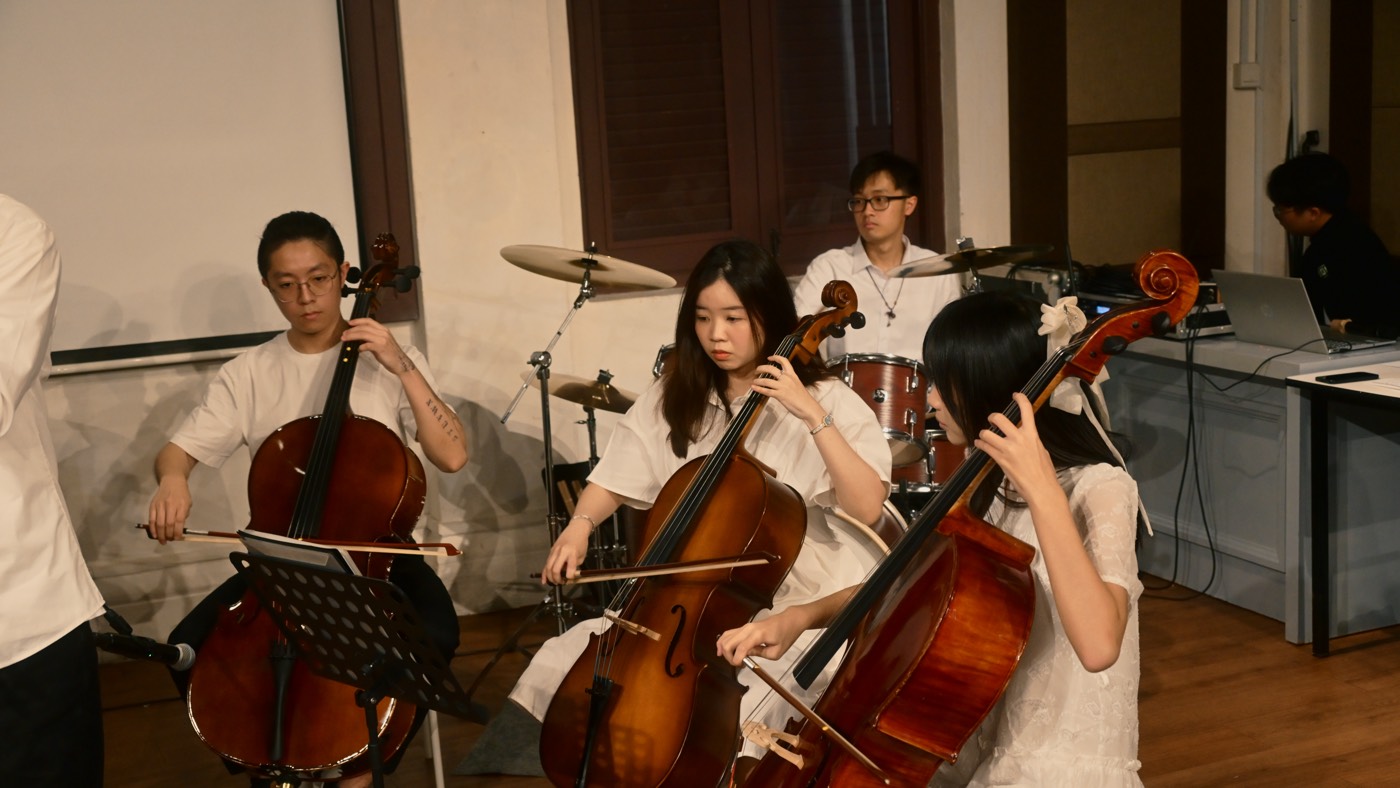
Families arrive at this choice more often than any other pairing in the string family. We teach both — violin from five and cello from seven — and the instruments look closely related. They are taught in the same tradition, and a parent reasonably assumes the decision is mostly about size and taste.
It is a little more than that. The differences worth knowing are physical, practical and — for a beginner — quite audible.
- The violin opens at five; the cello waits until seven. If your child is five or six, the choice may make itself.
- The cello is kinder to a beginner's ears and, for many students, easier to hold in tune early on.
- The violin is easier to carry, cheaper to size up, and far more common — which matters for finding ensembles.
- Neither is the harder instrument overall. They are hard in different places, at different stages.
The honest differences
| Violin | Cello | |
|---|---|---|
| Starts from | Age five | Age seven |
| How it is held | Between jaw and shoulder, arms raised | Seated, resting against the body |
| Early difficulty | Holding position, bow control, tone | Reaching around the instrument, shifting, transport |
| First-year sound | Thin and effortful until the bow settles | Warm early — the register flatters a beginner |
| Sizes to buy through | Commonly four or five before full size | Commonly three or four before full size |
| Transport | Fits in a school bag or on a lap | Needs a car and a soft-case plan |
| How common it is | Very — teachers, ensembles and repertoire everywhere | Less so, which cuts both ways |
Posture is the real dividing line
The violin asks a child to hold an object between the jaw and the shoulder, keep it there without gripping, and operate both arms above waist height for the length of a practice session. It is an unnatural posture and it takes months to stop feeling like one. Small children generally manage it well; the difficulty is not strength but the sheer strangeness.
The cello asks almost the opposite. The instrument rests against the body and the floor takes its weight, so nothing is being held up. What it asks instead is reach — the left arm works around a larger fingerboard, and a child too small for the instrument in front of them will compensate in the shoulder. This is why the cello starts two years later, and why sizing it correctly matters more than it does on the violin.
For a child with any history of neck or shoulder discomfort, the cello is usually the gentler proposition. For a child who fidgets and would rather stand, the violin often suits better than a chair does.
Which is harder, and when
The common claim is that the cello is easier to start and the violin easier to continue. There is something in it, though it is worth being precise about where the difficulty actually sits.
A beginner cellist tends to sound acceptable sooner. The strings are longer, the spacing between notes is wider, and small errors of finger placement are proportionally smaller errors of pitch. The register is also more forgiving — a slightly rough cello note reads as warm, where the same roughness on a violin's E string is unmistakable. Parents notice this within weeks.
The violin repays the harder start. Once the bow arm settles, the instrument is light, quick and enormously versatile, and the sheer volume of repertoire and ensemble opportunity is not close. Cellists catch up in their own way — the shifting and thumb position that arrive in the intermediate years are genuinely demanding, and the point at which a cellist is asked to read three clefs surprises most students.
Our honest summary is that the first year favours the cello and the middle years favour neither. Choosing on difficulty is choosing on the wrong axis.
Thirty minutes with each instrument settles this faster than any amount of reading. Trials run at Pandan Indah and Damai Perdana. Trial lesson fees apply.
Book a Trial LessonThe practical differences nobody mentions
A cello does not fit on a motorcycle, in a small car boot alongside a week's shopping, or comfortably on public transport in the afternoon heat. If lessons involve one parent, one car and a school run, this is a real constraint and it is better weighed now than in month four.
Cost runs the same way. Both instruments are usually rented at the smaller sizes and both need a bow rehair and strings from time to time, but a cello costs more at every size, needs a larger case, and — if you eventually buy — is a materially bigger purchase. Renting until a child reaches full size is the sensible default on both instruments, and more obviously so on the cello.
Against that, the cello's relative scarcity is an advantage once a student is playing well. Ensembles need cellists and there are fewer of them, so a competent teenage cellist tends to be asked to play more often than an equally competent violinist.
When the child has no preference
This is the commonest case, and it is worth resisting the urge to decide it on the parent's behalf. Three things usually resolve it.
Age first. At five or six the cello is not yet open to them, and a year of waiting is a long time at that age. Body second — reach, and whether the child is comfortable seated for twenty minutes. Sound third, and it deserves more weight than it usually gets: play a child a good recording of each, watch which one they lean toward, and take the answer seriously. A child who loves the sound of their instrument practises.
If it is still level after all three, choose the violin for a five- or six-year-old and let them move to cello later if they want to. Two or three years of violin transfers to the cello far better than nothing does — the ear, the reading and the bow arm all carry across, and the switch is common enough to be unremarkable.
Frequently asked questions
In the first year, usually yes. Wider spacing between notes makes small finger errors less audible, and the register flatters a beginner's tone. That advantage evens out in the intermediate years, when shifting, thumb position and reading three clefs arrive.
From seven at the academy, against five for the violin. The limit is reach rather than strength — a child working around an instrument that is too large for them compensates in the shoulder, which is the one habit worth avoiding from the start.
Yes, and it happens often enough to be unremarkable. The ear, the reading and much of the bow arm transfer directly, so a violinist of two or three years moves across far faster than a complete beginner would.
We would generally advise renting until a student reaches full size, on either instrument. A child moves through three or four cello sizes on the way up, and buying each one is a poor use of money that is better spent on a good instrument at the end.