It usually arrives without warning, on a weekday, in four words. Parents hear a verdict in it — months of lessons, an instrument in the corner of the living room, and a child who has apparently concluded it was all a mistake.
It is rarely a verdict. It is a report on a week, delivered in the only vocabulary a child has for the job — and the decision it seems to demand is almost never the one in front of you.
- It is usually one thing, and rarely the instrument. A piece pitched wrong, a heavy term at school, or a practice routine that has become an argument.
- Carry on or stop is a false pair. Pausing, shortening the lesson and changing instrument all sit between them, and all keep the ground gained.
- Ask what changed. Resistance that appeared suddenly has a cause, and it is usually findable.
- Tell the teacher first. Most of what looks like a motivation problem is a pitching problem.
What "I want to stop" usually means
Children have a small vocabulary for large feelings. I want to stop is often the nearest sentence to this week was hard, or I am not good at this and I do not want you watching me fail at it. Taken literally it sounds like a position. It seldom is.
There is usually a specific cause underneath, and it is usually recent. A piece pitched slightly too hard turns every session into failure; pitched too easy, it becomes boredom, which children rarely name and often express as dislike of the instrument itself. And every learner meets the same gap: a child can hear the music they want long before their hands can produce it.
Just as often it has nothing to do with music — a difficult term, a friendship, a heavier timetable. Music is the one commitment a child believes is negotiable, so it is the one they negotiate.
| What they say | What it often means | What tends to help |
|---|---|---|
| "It's boring." | The material sits below them, or the piece has gone on too long. | Ask the teacher for something harder, or something the child picks. |
| "I'm not good at it." | They can hear the distance between their playing and the music in their head. | Slow the piece until it is achievable. Success restores motivation; encouragement alone does not. |
| "I hate practising." | The nightly argument has become the problem. The instrument is incidental. | Fix the trigger rather than the child — a fixed time, attached to something that already happens. |
Carrying on and stopping are not the only options
Families present the question as a binary because that is the shape an enrolment has: you are either in or you are not. But the space between those answers is wide, and stopping is expensive in a way that is invisible at the time. Reading fades, hand shape softens, and the reflexes that took a year to build do not sit and wait — a child who stops in a difficult October does not come back in June where they left off.
A child who says they want to stop is almost never asking to stop forever. They are asking for this week to be different.
Three things worth trying first
Take a break rather than a decision. A pause and a stop are different things, and the difference matters most to the child, who hears we are stopping as a judgement on themselves rather than the timetable. If a break is what a family needs, it is worth a conversation rather than a quiet disappearance.
Make the lesson shorter before you make it vanish. An hour that has become a chore is not the only size a lesson comes in. Thirty minutes a week preserves what matters — the same teacher, the same time, the reading, the reflexes — at a scale that fits a hard term.
Change the instrument, not the habit. This is the option most families never consider, and often the one that works. Reading, pulse and the discipline of practising all transfer, so a child who moves across is not starting again — and because minimum ages differ, one who has stalled is often now old enough for an instrument that was closed a year ago.
Opens exactly when a stalled piano beginner is old enough for it. Physical, loud in the right way, and satisfying.
The usual landing place for a child who never got comfortable holding a violin. Sitting down changes everything.
The ukulele opens at two and the gu zheng at six, and both sound good early — which is what a discouraged child needs. All eight starting ages are on the instruments page.
Half an hour on something different is usually enough to tell. Trials are thirty minutes, one-to-one, at Pandan Indah or Damai Perdana. Trial lesson fees apply.
Book a Trial LessonThe practice argument is usually the real one
Trace the resistance back far enough and it often stops at practice rather than lessons. The child is not refusing the instrument; the household is worn down by a nightly negotiation, and the child has worked out which sentence ends it.
The fix is dull. Attach practice to something that already happens at a fixed time, so it stops being a decision anyone has to win, and keep the target small — a child who believes practice means ten minutes will sit down; one who believes it means an hour will not. More in our guide to how much a child should practise.
Eleven and twelve
There is one age at which this happens more than any other. School examinations arrive, the timetable tightens, and music is the first thing cut — not because it is valued least, but because it is the only thing nobody at school marks.
Worth saying plainly, since families sometimes assume otherwise: we do not currently enter students for graded examinations. ABRSM and Trinity preparation is coming soon, and will be optional when it arrives. Nothing here adds to that term's load — the pressure is school pressure, and music is simply where it gets paid.
This is precisely where reducing beats stopping. A thirty-minute lesson through a hard year costs an hour a week including the drive, and keeps everything intact. We see the alternative from the other end: a great many of the adults who come to us in their thirties and forties stopped at eleven or twelve, for exactly these reasons. Stopping at twelve is rarely stopping for a year — more often for twenty-five.
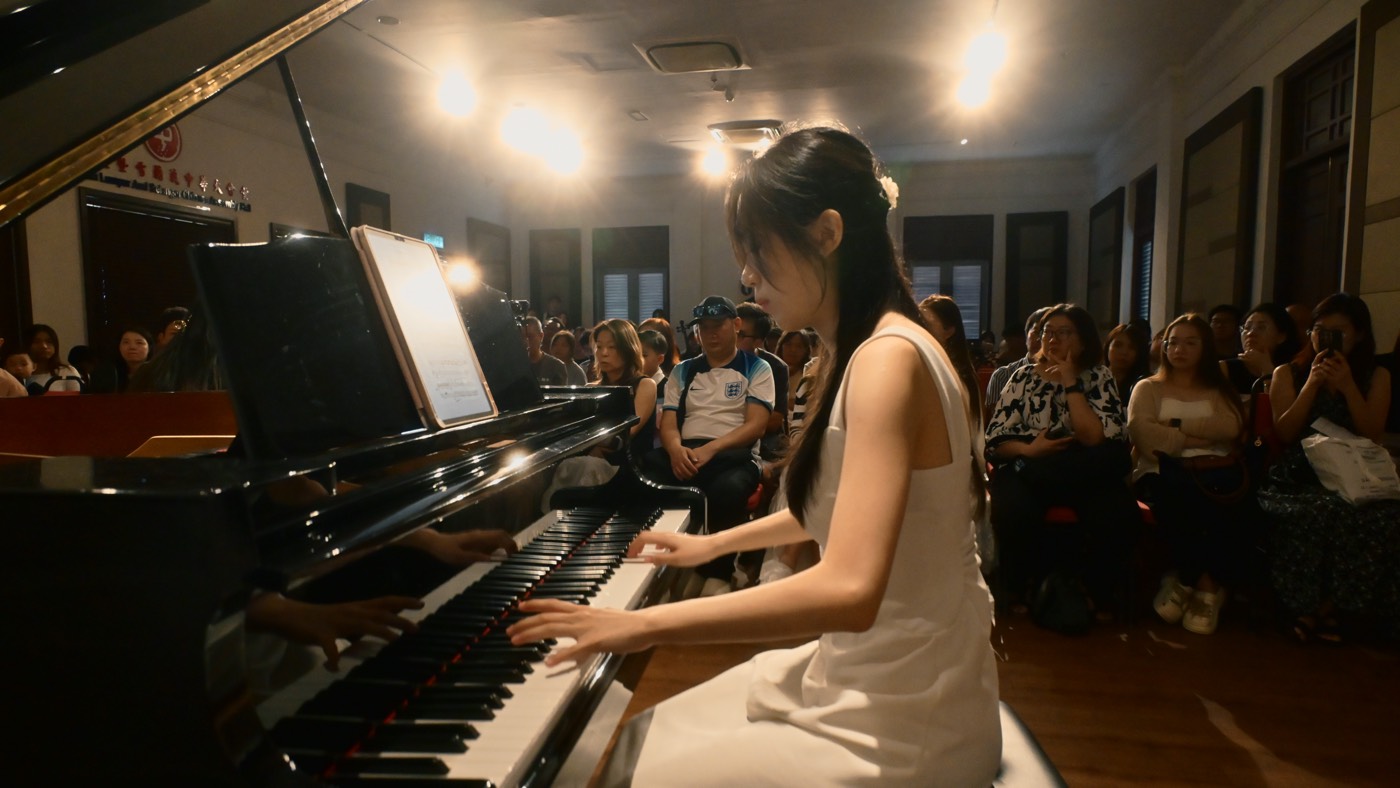
What changes a child's mind, more reliably than any conversation, is playing in front of people and finding they can — part of why the academy holds a recital every three months. The child who wanted to stop in August is often the one asking in October what they play in the next one.
Before any of that, though, tell the teacher what has changed at home. It is fixable far more often than it feels on the evening it is said.
Frequently asked questions
Ask what changed before you answer. Resistance that appears suddenly usually has a cause — a piece pitched too hard, a heavy term at school, an argument about practice that has outgrown the practice itself. Tell the teacher first: it is usually fixable in a lesson or two.
It is a reason to change the practice rather than the lessons. Attach it to a fixed point in the day so it stops being a nightly negotiation, and keep the target small — twenty minutes on most days does more than an hour at the weekend. If resistance continues, the material is usually pitched wrong, and a teacher can re-pitch it in a week.
A break is usually a better idea than a decision, and it is worth speaking to us rather than simply stopping. What suits a family varies with the term and the child, so the arrangements are a conversation.
No, and it is frequently what prevents it. Reading, pulse and the habit of practising all carry across, so a child moving from piano to drums is not starting again. Our eight instruments have different minimum ages, so a child who has stalled on one is often old enough for another.